
Dr. Lindsey Thiessen is the new small fruits pathologist at Clemson University. Her research focuses on the epidemiology of diseases in small fruits and developing precision disease management strategies to reduce the impacts of economically important diseases.
About Me
My appointment is research and extension, and I am eager to build a robust pathology program supporting strawberries, blueberries, grapes, blackberries, and other small fruits important to South Carolina. I am excited to develop a robust, integrated program that seeks a collaborative relationship with stakeholders to identify key challenges for innovation.
Clemson Small Fruit Pathology
My research interests revolve around understanding how pathogens move, interact with plants, and respond to environmental changes. I have previously developed early warning strategies using spore monitoring systems, model-based risk alerts, and visual monitoring alert systems. These systems helped optimize fungicide programs and other integrated disease management strategies by allowing for decisions to be made in advance of pathogen pressures. My research program will continue work to developing and optimizing disease management programs that are of importance to growers. An emerging challenge to strawberry production in SC is Neopestalotiopsis leaf, crown, and fruit rot.
I arrived in SC in August of 2025, and I have begun investigating the biology of Neopestalotiopsis infections in strawberries. It’s unclear at what stage of strawberry growth that infection is most impactful in systems that use plastic covers for frost protection. Additionally, it is unclear if plastic covers increase the survival of this pathogen in the soil despite freezing temperatures. I am also interested in understanding how the interactions of diverse Neopestalotiopsis isolates respond to strawberry cultivars in controlled and field environments. The origin of Neopestalotiopsis is unclear, and it is important to get a larger picture view of the pathogen to determine robust varieties, effective fungicide chemistries, and cultural practices that reduce losses. While my research program begins to evaluate Neopestalotiopsis isolates, I am investigating immediate solutions for farmers. Currently, I am evaluating a cultivar trial (Figure 1) with 16 different varieties for their tolerance to Neopestalotiopsis. I hope to identify varieties that perform well in the SC environment that have reduced impacts from Neopestalotiopsis infections.
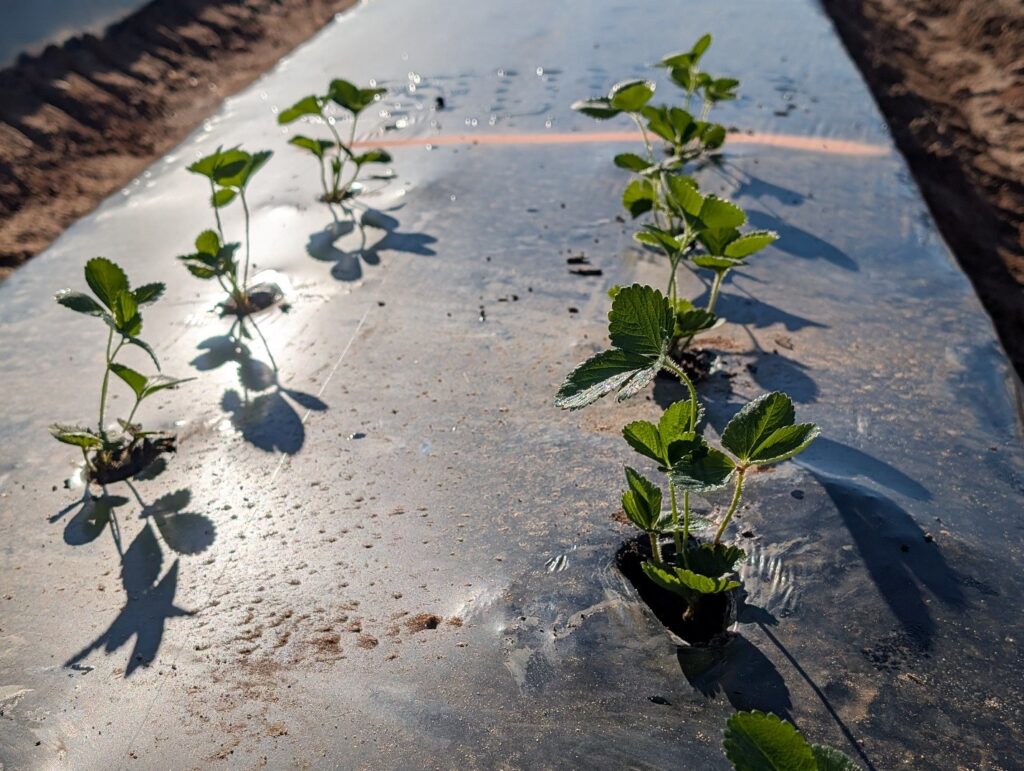
While my first steps into small fruit pathology are to investigate solutions for Neopestalotiopsis leaf, crown, and fruit rot, I will cover all small fruits of interest to SC producers (e.g., blueberry, grape, blackberry, raspberry, etc.). I look forward to working closely with stakeholders and researchers to develop solutions for the unique disease challenges in small fruit production!