Jonathan E. Oliver, Fruit Pathologist, Department of Plant Pathology, University of Georgia-Tifton Campus
Table of Contents
Introduction
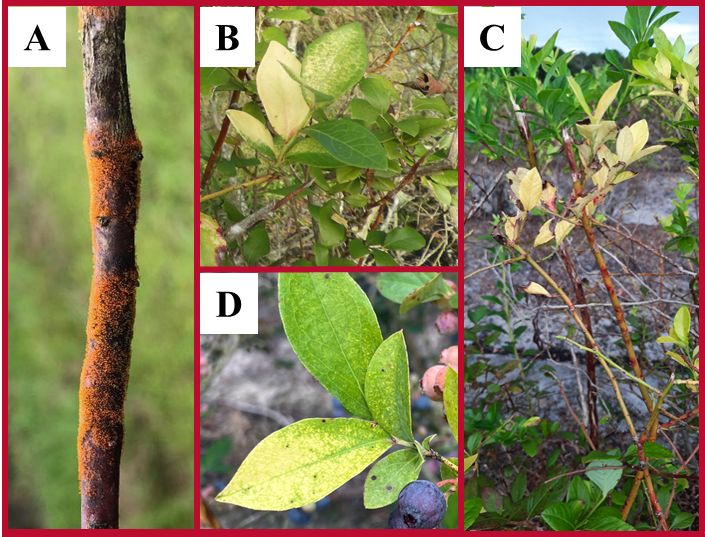
Though previously not know to be a widespread issue in Georgia blueberries, particularly wet weather across Georgia’s blueberry production belt in 2021 led to multiple reports of algal stem blotch (Oliver 2021). Concurrently, in 2021, algal stem blotch was observed for the first time on blueberries in North Carolina (Bill Cline, personal communication). In Georgia, even more severe issues with algal stem blotch were observed during the 2023 growing season in several southern highbush locations (Oliver 2023), and, in summer 2024, symptoms on rabbiteye blueberries in Georgia were observed as well (Figure 1).
Algal stem blotch is caused by Cephaleuros virescens, a parasitic algal species that also causes orange cane blotch (orange felt disease), a major disease of blackberries in the southeastern U.S. (Brannen 2017; Schilder 2017). The primary symptoms of algal stem blotch on blueberry include red blotches that appear on the juvenile stems of blueberry plants, and leaf yellowing/whitening (Schilder 2017; Phillips et al. 2018). The red blotches result from the alga growing beneath the stem cuticle (the outermost waxy layer of the stem). As infected stems age and become woody, these lesions become less obvious until the alga sporulates through the bark, forming felt-like mats of bright orange sporangiophores (algal spore-producing structures) (Figure 1A). In addition to these bright orange mats, the chlorosis (yellowing) or bleaching (whitening) of leaves (Figure 1B, 1C, 1D) caused by algal stem blotch can also be striking (Phillips et al. 2018). The chlorosis caused by algal stem blotch is typically more irregular (less uniform) and “blotchier” (sometimes speckled) compared to similar symptoms caused by nutrient deficiencies or other diseases, and this chlorosis has been hypothesized to result from a toxin produced following algal colonization of the plant that is released into the infected stem. Plants severely affected by algal stem blotch can lack vigor and fail to regrow after summer pruning, and defoliation of affected stems is likely to occur. As such, repeated issues with algal stem blotch year after year can make blueberry plantings unproductive (Phillips et al. 2018).
Unfortunately, very little information exists regarding the control of algal stem blotch on blueberry. Since this disease is caused by an alga rather than a fungus, it is unlikely that most fungicides will be effective for management. Recommendations from the 2024 Florida Blueberry Integrated Pest Management Guide (Harmon et al. 2024) suggest that sprays with copper-containing fungicides (such as Kocide® 3000-O) can help to reduce algal sporulation and thereby protect healthy canes from infection. However, these products are not useful for eradication of the disease or elimination of existing symptoms, and minimal field trial work has been conducted with this disease. In recent years, trial work done by the UGA-Tifton Fruit Pathology Laboratory on blackberries with orange cane blotch (which is caused by the same algal species as algal stem blotch of blueberry) showed that foliar applications of ProPhyt (potassium phosphite) can reduce both the size and number of stem blotches on developing canes by up to 90% (Hemphill et al. 2019, 2020a, 2020b). However, the effects of this product on algal stem blotch control on blueberries was not known. Given that ProPhyt (and other phosphonate fungicides such as K-Phite, etc.) are routinely used in southeastern U.S. blueberry production during the summer and fall for the effective management of leaf spots and Phytophthora root rot, we carried out a field trial over two growing seasons to examine the impacts of monthly after-harvest applications of phosphonates and copper fungicides on the control of algal stem blotch in blueberries.
Materials and methods
Fungicide efficacy field trial. Chemicals were evaluated for control of algal stem blotch on plants of southern highbush blueberry cultivar ‘Farthing’ at a commercial blueberry farm near Blackshear, Georgia, with a history of algal stem blotch. Three treatment programs were utilized: ProPhyt (4 pt/A), Kocide 3000-O (3.5 lb/A), and an untreated control. Treatments were applied to a randomized complete block design with five replicate plots per treatment. Each sprayed plot consisted of twenty blueberry plants with one or more untreated plants in between plots. All treatments were applied until runoff (equivalent to 75 gal water/A) using a CO2 sprayer with cone nozzle at 40 psi. Applications were made over two growing seasons in the months following postharvest hedging activities (which occurred in June 2024 and June 2025). During 2024, treatment applications were made on 5 July, 9 August, and 9 September. During 2025, applications were made on 10 June, 10 July, 8 August, and 8 September 2025. Other than the treatments detailed above, treated rows were not sprayed with phosphonate fungicides (FRAC P07) or copper fungicides (FRAC M1) during either growing season. The application of insecticides, other fungicides, and cultural practices were otherwise consistent with southern highbush blueberry production methods commonly observed in the Southeast. In October 2024, trial plots were initially examined for the presence of algal stem blotch symptoms. However, since only minimal, scattered symptoms were found throughout, a full assessment of symptoms was not made in 2024. The same plots treated in 2024 received the same treatment application during the 2025 growing season. On 25 September 2025, plants within each plot were assessed for algal stem blotch symptom incidence and symptom severity (Figure 2) on a per plot basis. Incidence data was analyzed using analysis of variance (ANOVA) followed by Tukey’s honest significant difference test (HSD) using the package agricolae in R (R v. 4.5.0, The R Foundation, Vienna, Austria).
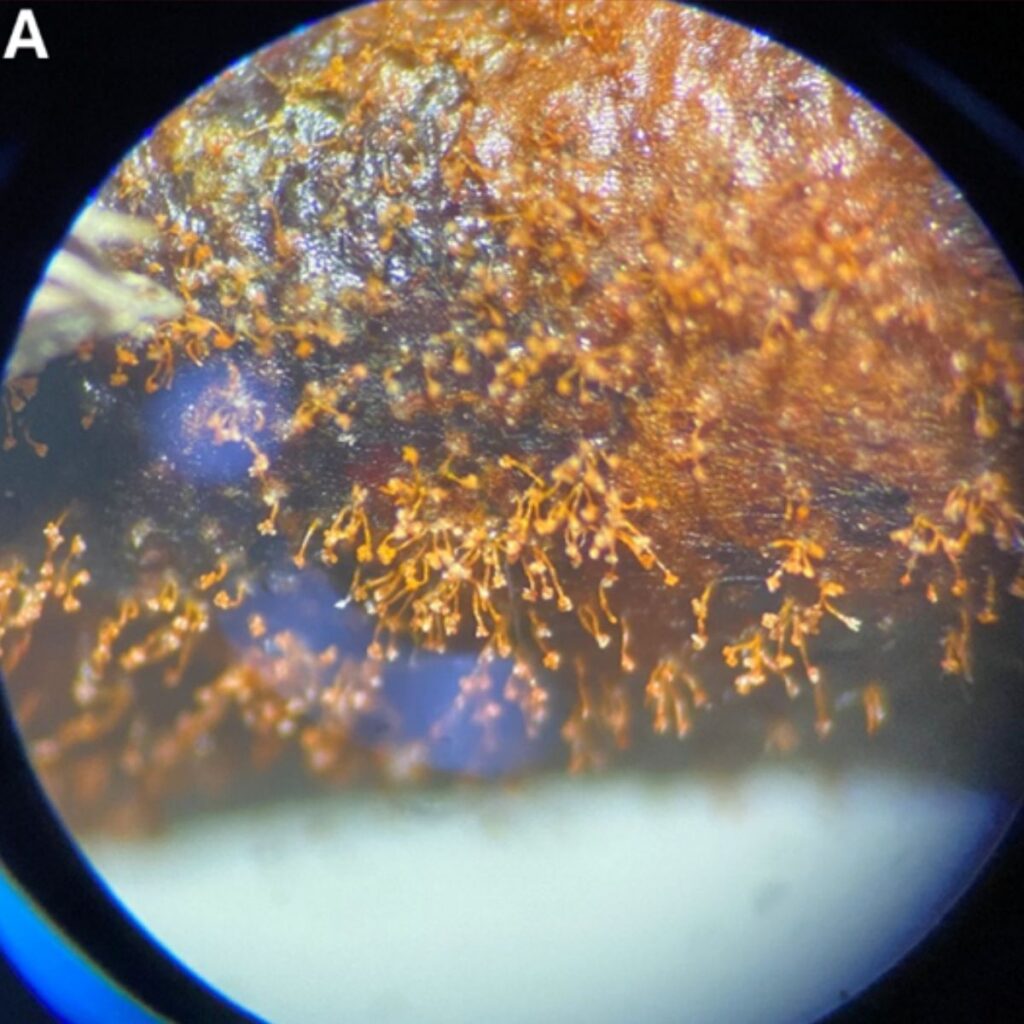
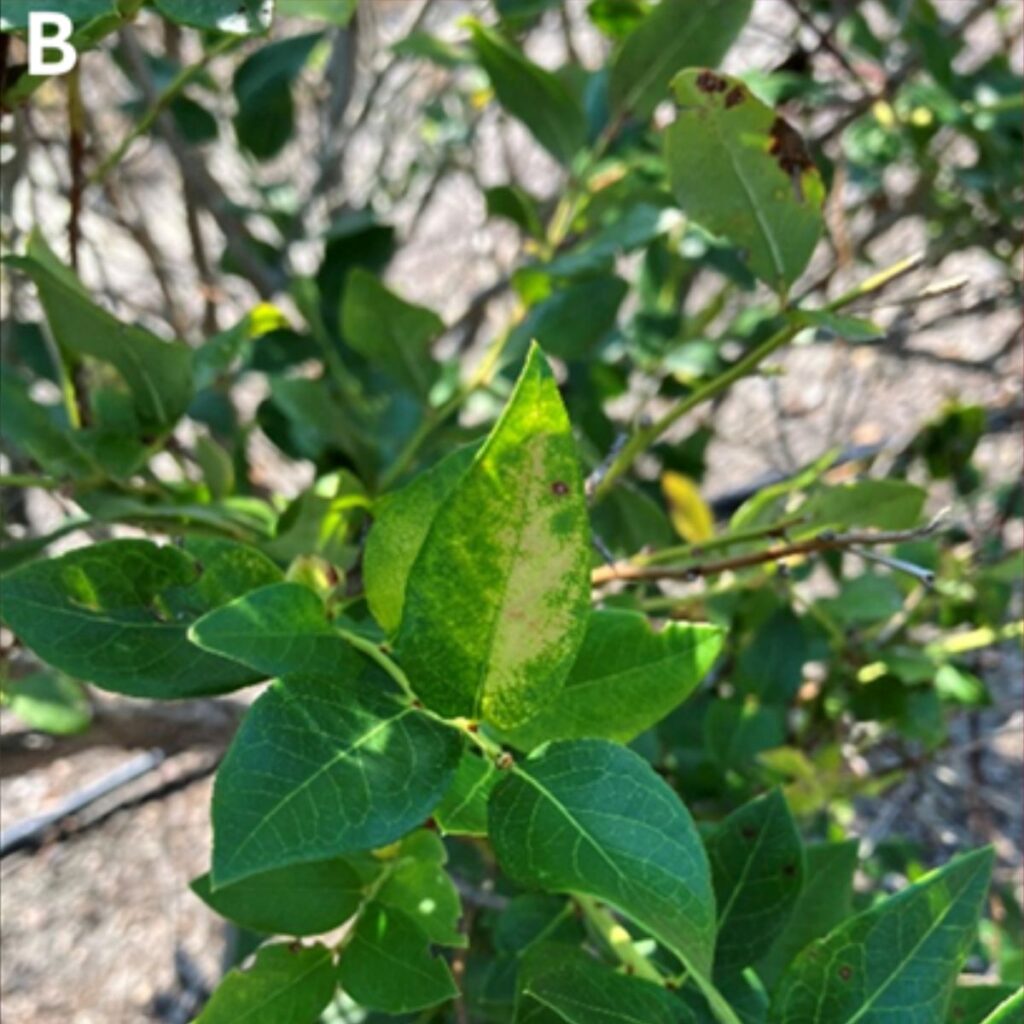
Table 1. Summary of symptom incidence and severity as assessed on 25 September 2025.
| Treatment and amount/A | Application timingz | Symptom Incidencey (% Symptomatic Plants/Total) | Overall Severityx (Symptomatic Terminals per Plant) | Symptomatic Plant Severityw (Symptomatic Terminals per Symptomatic Plant) |
|---|---|---|---|---|
| Untreated control | 100.0 a | 16.0 a | 16.0 a | |
| ProPhyt 4 pt | 1-7 | 33.3 b | 0.5 b | 1.4 b |
| Kocide 3000-O 3.5 lb | 1-7 | 8.9 c | 0.1 b | 1.2 b |
zApplications were made on: (1) 5 Jul 2024, (2) 9 Aug 2024, (3) 9 Sep 2024, (4) 10 Jun 2025, (5) 10 Jul 2025, (6) 8 Aug 2025, and (7) 8 Sep 2025.
yAverage incidence of algal stem blotch symptoms (% of plants with each plot showing symptoms) including chlorotic/bleached/speckled leaves xOverall severity of algal stem blotch symptoms (symptomatic terminals per plant) across all evaluated plants per plot.
wSeverity of algal stem blotch symptoms (symptomatic terminals per plant) across only the symptomatic plants within each plot.
Means in each column followed by the same letter are not significantly different according to the Tukey’s honest significant difference test (HSD) (α=0.05).
Results
Algal stem blotch incidence and severity assessments. Conditions were adequate for disease development, with 100% of the plants within the untreated control plots showing symptoms at the time of assessment in September 2025. By contrast, the plots treated with ProPhyt and Kocide 3000-O had a significantly lower incidence of algal stem blotch symptoms (Table 1) relative to the untreated control plots. The lowest average incidence (8.9%) was observed in the plots treated with Kocide 3000-O, and this incidence was significantly lower than the average incidence for the plots treated with ProPhyt (33.3%). In terms of disease severity (number of symptomatic terminals per plant and number of symptomatic terminals per symptomatic plant), both the ProPhyt and the Kocide 3000-O treatments resulted in a significant reduction relative to the untreated control. Minor signs of phytotoxicity (leaf burn) were evident in some of the plots treated with Kocide 3000-O as well as some of the plots treated with ProPhyt. This was attributed to some of the applications with these materials having been made to plants in direct sun at high summer temperatures during 2025.
Discussion and conclusions
Based upon the results from the field trial conducted in Georgia during 2024 and 2025, both Kocide 3000-O and ProPhyt appear to have efficacy against algal stem blotch when used on a monthly basis after harvest. The use of each of these products dramatically reduced observed algal stem blotch severity (number of chlorotic terminals per plant) by over 90% relative to the untreated control plots. Likewise, disease incidence (percentage of symptomatic plants with at least one chlorotic terminal) was reduced by both treatments, including an over 90% reduction in algal stem blotch incidence in the Kocide 3000-O treated plots and an over 66% reduction in incidence in the ProPhyt treated plots. Taken together, this suggests that the use of either of these fungicides after harvest may reduce algal stem blotch, with Kocide 3000-O seemingly having somewhat more efficacy against this disease than ProPhyt.
Of note, this trial was conducted over two growing seasons with after-harvest applications being made to the same plants during both 2024 and 2025. When plants were first examined for algal stem blotch symptoms in fall 2024, incidence was fairly minimal and sporadic; however, by fall 2025, incidence on plants in the untreated control plots was 100%. It is unclear whether this increase was the result of particularly favorable conditions for algal stem blotch development during the 2025 season or if this disease just took more than one year to build up to significant levels to allow for visual trial evaluation. As such, the specific impacts of sprays made during a single growing season during this trial could not be determined. All that can be concluded is that over the two-year trial period, disease was dramatically reduced within the treated plots relative to the untreated control plots. Nonetheless, given the biology of the algal pathogen causing this disease and the modes of action of the tested fungicides, it seems likely that multi-season (and repeated) applications are necessary to achieve noticeable control. Ultimately, additional research will be necessary to understand the specific impacts that applications with these materials have on algal stem blotch disease progression and development. Understanding these impacts may allow for even more targeted and effective use of these materials against algal stem blotch disease in blueberry.
Acknowledgements
This article has been adapted from a grant report submitted for Southern Region Small Fruit Consortium (SRSFC) Project #2025 R-11 (PDF). Additional information regarding the management of algal stem blotch in southeastern U.S. blueberry production will appear in the upcoming 2026 edition of the Southeast Regional Blueberry Integrated Management Guide. View IPM/Production Guides on the SRSFC website.
We would like to thank the commercial blueberry grower in Pierce County who allowed us to carry out this trial work in his field as well as UGA cooperative extension agents James Jacobs and Zack Williams for their assistance. In addition, we thank the members of the UGA-Tifton Fruit Pathology Laboratory, including Lance Alberson, Mirza Beg, and Anupa Adhikari for their help with spraying and/or trial assessment. This research and the UGA personnel who carried it out were funded, in part, by USDA-NIFA HATCH project no 1016575, the UGA College of Agricultural and Environmental Sciences, and a grant from the SRSFC.
References
Brannen, P.M. 2017. Orange Felt Disease. Pages 69-70 in: Compendium of Raspberry and Blackberry Diseases and Pests, second edition. R. R. Martin, M. A. Ellis, B. Williamson and R. N. Williams, eds. APS Press, St. Paul, MN.
Harmon, P.F., Liburd, O.E., Dittmar, P., Williamson, J.G., and Phillips, D. 2024 Florida Blueberry Integrated Pest Management Guide. HS1156. Gainesville: University of Florida Institute of Food and Agricultural Sciences.
Hemphill, W., Oliver, J.E., & Brannen, P. 2020a. Evaluation of late-season and early-season applications of potassium phosphite for management of orange cane blotch on blackberry floricanes in Georgia, 2019. Plant Disease Management Reports. 14:PF06.
Hemphill, W., Oliver, J.E., & Brannen, P. 2020b. Evaluation of early-season, late-season, and long-season applications of potassium phosphite for management of orange cane blotch on blackberry primocanes in Georgia, 2019. Plant Disease Management Reports. 14:PF031.
Hemphill, W., Brannen, P., & Oliver, J.E. 2019. Efficacy of potassium phosphite for control of orange cane blotch of blackberry in Georgia, 2018. Plant Disease Management Reports. 13:PF010.
Oliver, J.E. 2021. “Reports of Algal Stem Blotch on Blueberry.” UGA Blueberry Blog.
Oliver, J.E. 2023. “Reports of Algal Stem Blotch on Blueberry (2023).” UGA Blueberry Blog.
Phillips, D., Flor, N., and Harmon P. 2018. Algal Stem Blotch in Southern Highbush Blueberry Florida. PP334. Gainesville: University of Florida Institute of Food and Agricultural Sciences.
Schilder, A.M.C. 2017. Algal Stem Blotch. Pages 85-87 in: Compendium of Blueberry, Cranberry, and Ligonberry Diseases and Pests, second edition. J.J. Polashock, F.L. Caruso, A.L. Averill, and A.C. Schilder, eds. APS Press, St. Paul, MN.