Midhula Gireesh, Assistant Professor and Extension Specialist, Department of Entomology and Plant Pathology, University of Tennessee
Table of Contents
Background
The spotted lanternfly is an invasive planthopper native to China, India, and Vietnam, and was first detected in Pennsylvania, US, in 2014. Since its initial detection in Pennsylvania, spotted lanternfly has rapidly expanded throughout the eastern United States and is now established in at least 18 states, including several in the southeastern region. As this invasive pest continues to spread southward, concerns are increasing about its potential impacts on vineyards, specialty crop systems, ornamental nurseries, and urban landscapes.
Description of Life Stages
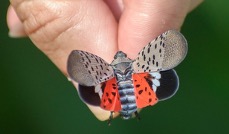
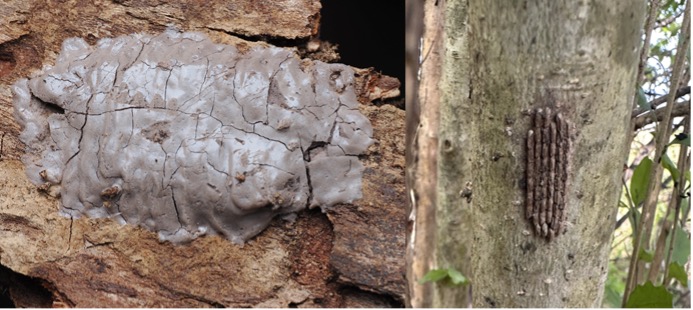
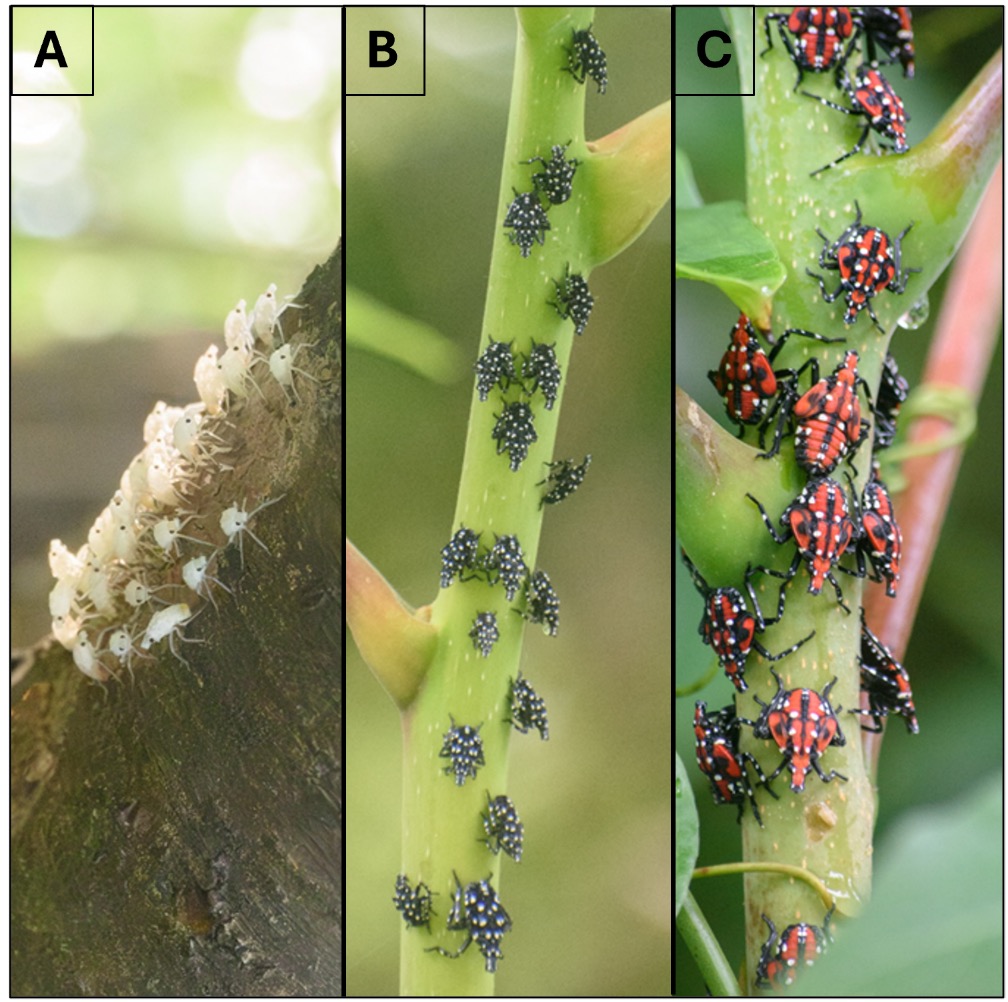
Adult spotted lantern flies are approximately one inch in length with light brown to gray forewings that have black spots centrally and wing tips having black dashes arranged in a brick wall pattern (Figure 1). The hindwings have a red band close to the body with black spots, followed by a white band, and then a black band at the wing tips. The head and legs are black, while the body is yellow with broad black bands. Spotted lanternfly egg masses are brown with a gray, waxy covering and may contain up to 60 eggs (Figure 2). Over time, the waxy covering can weather and disintegrate, exposing the eggs. Eggs hatch into pearly white hatchlings, which quickly develop into first instar nymphs (Figure 3). Immature spotted lanternflies are referred to as nymphs and have four stages, known as instars. Early instar nymphs are black with white spots, whereas fourth instar nymphs develop distinct red and black coloration with white spots.
Damage and Host Range
Spotted lanternfly feeds using piercing-sucking mouthparts and in North America, it has been associated with at least 56 introduced and native plant species representing 22 documented plant families, including tree of heaven, grapes, maple, willow, black walnut, and numerous ornamental hosts. Spotted lanternflycan cause both direct and indirect damage to host plants through feeding activity. Heavy feeding by nymphs and adults may reduce plant vigor, impair sap flow, and contribute to foliar wilting and flagging. Indirect damage occurs through honeydew production, which promotes sooty mold growth on foliage, fruit, and surrounding surfaces, reducing plant aesthetics and fruit marketability.
Among specialty crops, grape vineyards remain a major concern for spotted lanternfly establishment. Previous reports from heavily infested regions have documented impacts including reduced vine vigor, reduced starch reserves, lower fruit quality, and increased management costs. Moreover, this insect may affect the nursery and landscape industries through quarantine restrictions, inspection requirements, and increased labor associated with monitoring and treatment.
One of the major reasons for the rapid spread of spotted lanternfly is its ability to “hitchhike.” Egg masses are commonly laid on vehicles, trailers, pallets, firewood, outdoor equipment, stone, and other movable materials. This behavior has significantly contributed to long-distance movement throughout the United States and continues to pose challenges for containment and regulatory efforts.
Seasonal Activity and Ongoing Observations
Spotted lanternfly is considered a univoltine insect, having one generation per year. The insect overwinters as an egg, with nymphs emerging in spring and early summer, depending on environmental conditions and geographic location. Researchers from Mid-Atlantic states found that adults are generally present from mid-summer through frost, with populations often increasing during late summer. As spotted lanternfly continues expanding into new regions, environmental conditions may influence seasonal development and activity patterns differently across geographic areas. Research efforts have begun in Tennessee to better understand spotted lanternfly seasonal phenology and host associations under southern environmental conditions. Ongoing observations are helping researchers evaluate how spotted lanternfly development and activity may differ in the South compared with Mid-Atlantic populations, where much of the current biological information has been generated.
Understanding how spotted lanternfly responds to southern climates will be important for improving scouting programs, refining management timing, and identifying potential risks to specialty crop systems throughout the region. These efforts are expected to support future development of region-specific monitoring and management recommendations for growers and stakeholders across the South.
Management
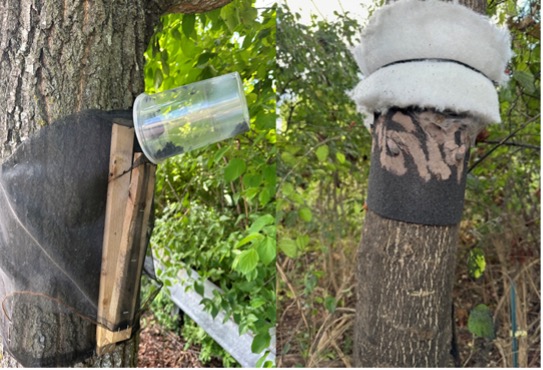
Preventing movement of spotted lanternfly remains one of the most important management strategies. Careful inspection of vehicles, trailers, nursery stock, outdoor equipment, and other materials stored outdoors is critical for reducing spread. Monitoring tools such as circle traps and lampshade traps have been used to detect spotted lanternfly populations.
Mechanical destruction of egg masses may help reduce future populations, while chemical management may be necessary in established infestations. Several insecticide active ingredients have demonstrated efficacy against spotted lanternfly in infested regions, particularly in vineyard systems. In grapes, pyrethroids such as beta-cyfluthrin, bifenthrin and fenpropathrin, provided the greatest residual control against spotted lanternfly. Generalist predators such as wheel bugs, spiders, and praying mantids have been observed feeding on spotted lanternfly. Additionally, fungal pathogens, including Beauveria bassiana and Batkoa major, have been reported infecting spotted lanternfly populations in isolated locations. However, more studies are warranted to better understand the potential role of biological control agents in spotted lanternfly management programs.
Growers, vineyard managers, nursery professionals, and homeowners are encouraged to:
- Monitor susceptible host plants for various spotted lanternfly life stages
- Inspect equipment and outdoor materials for spotted lanternfly egg mass
- Report suspected sightings
- Remain informed through Extension and regulatory updates.
Emergence in the South
Spotted lanternfly poses unique challenges in the southern United States, where climate conditions, crop systems, and movement pathways differ from those in regions where the pest was initially established. As of 2026, established or confirmed spotted lanternfly populations have been reported in several southern states, including Virginia (2018), North Carolina (2022), Tennessee (2023), Kentucky (2023), Georgia (2024), and South Carolina (2025). In Tennessee, spotted lanternfly populations were first confirmed in Davidson County in 2023, near a railroad corridor where rail cars are frequently staged (Figure 5). Since the initial detection, populations have been confirmed in additional counties within the state, including Wilson, Sullivan, Hamilton, Sumner, Jefferson, Knox, and Rutherford.
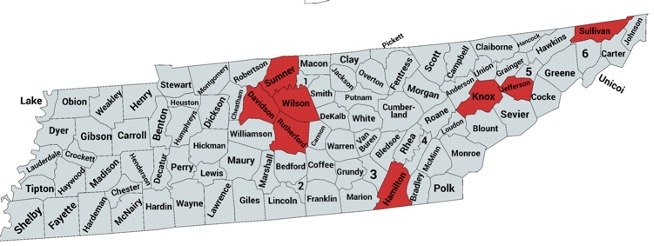
The widespread distribution of tree-of-heaven, a preferred spotted lanternfly host, may further contribute to establishment and spread throughout the region. Fourth instar nymphs and adults are commonly associated with tree-of-heaven, grapes, black walnut, maple, and willow. Moreover, the South also contains extensive nursery production, vineyards, transportation corridors, and urban landscapes that may facilitate spotted lanternfly movement and establishment.
Regional Collaboration and Extension Efforts
Following confirmation of spotted lanternfly populations in Tennessee, researchers and Extension specialists across the southeastern United States formed a regional working group to address spotted lanternfly issues in specialty crop systems. The Southern Spotted Lanternfly Working Group was established to improve coordination among researchers, Extension personnel, regulatory agencies, and industry stakeholders working on spotted lanternfly biology, ecology, monitoring, and management throughout the South.
Regional efforts include:
- Stakeholder meetings and surveys
- Development of Extension resources
- Monitoring and outreach programs
- Creation of the Southern Spotted Lanternfly Working Group website.
Although spotted lanternfly populations in many southern states are still emerging, continued expansion throughout the region remains likely. Ongoing collaboration among researchers, Extension specialists, state agencies, and industry stakeholders will be essential for improving preparedness and protecting southern specialty crop systems from this invasive pest. For additional information regarding spotted lanternfly identification and management, visit the Southern Spotted Lanternfly Working Group website or contact your local Extension office.
References
Calvin DD, Rost J, Keller J, et al. 2023. Seasonal activity of spotted lanternfly (Hemiptera: Fulgoridae), in Southeast Pennsylvania. Environ. Entomol. 52:1108-1125. https://doi.org/10.1093/ee/nvad093.
Gireesh M, Hale FA, Grant JF, et al. 2024. Spotted lanternfly. University of Tennessee Extension (W1032). https://utia.tennessee.edu/publications/wp-content/uploads/sites/269/2023/10/W1032.pdf
Harner AD, Rowles TK, Kar S, et al. 2025. Feeding by adult spotted lanternfly affects carbon allocation postinfestation in young grapevines. Am. J. Enol. Vitic. 76:0760014. https://doi.org/10.5344/ajev.2025.25002.
Leach H. 2020. Evaluation of residual activity of insecticides for control of spotted lanternfly in grape. Arthropod Manag. Tests. 46:tsaa123. https://doi.org/10.1093/amt/tsaa123.
Urban JM, Leach H. 2023. Biology and Management of the Spotted Lanternfly, Lycorma delicatula (Hemiptera: Fulgoridae), in the United States. Annu. Rev. Entomol. 68:151-167. https://doi.org/10.1146/annurev-ento-120220-111140.