Margaret Worthington and Carmen Johns, University of Arkansas
Sweet-Ark® Immaculate™ is a floricane-fruiting, thornless blackberry released in 2023 by the University of Arkansas System Division of Agriculture Fruit Breeding Program. This cultivar was developed to address a long-standing need for a firm-fruited, late-season blackberry suited to commercial shipping and local-market production. Market demand and wholesale pricing typically strengthen during the late floricane season, yet few available cultivars combine late ripening, consistently high yields, firm fruit, and manageable plant architecture. Sweet-Ark® Immaculate™ was selected to address these traits and has performed reliably in multi-year Arkansas trials under diverse weather conditions.
Key Details
- Type: Floricane-fruiting, thornless, semidwarf plants with erect/upright growth habit.
- Ripening: First harvest in Clarksville, AR, averaged June 26; peak around July 7. In season with or slightly later than Navaho and Von.
- Berry: Medium-sized (avg. 7.4 g), very firm, attractive sheen, great set, size can be variable.
- Yield: Similar to Osage and Sweet-Ark® Caddo, averaging 19,400 lb/ac across three years of evaluation.
- Flavor: Classic blackberry taste, similar to Natchez. Can be balanced sweet:tart or can be dominant tart depending on weather and crop load. Aromatic grape-like flavors are noted in the early harvest season.
- Postharvest: Holds up like Ouachita and Sweet-Ark® Caddo, with superior firmness and low decay. Red drupelet reversion (regression) was commercially acceptable and similar to Sweet-Ark® Caddo.
Growth Habit and Canopy Management:
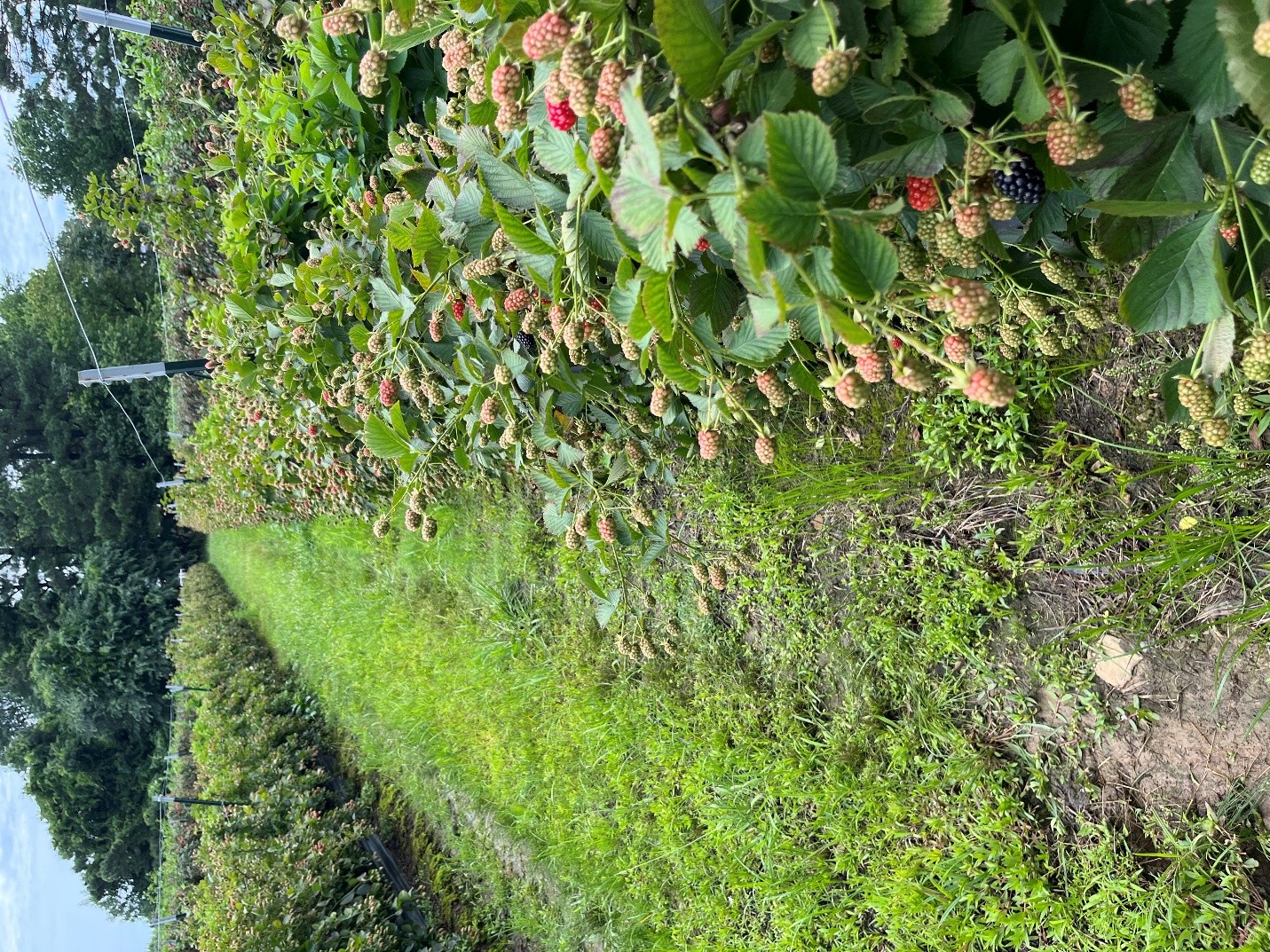
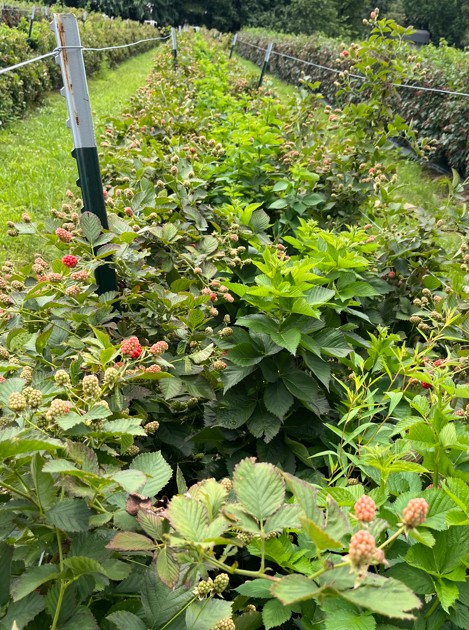
Sweet-Ark® Immaculate™ is floricane-fruiting with thornless, erect canes. The primocane internodes are shortened, similar to Sweet-Ark® Ponca, which results in a somewhat compact canopy structure at maturity. Primocanes typically don’t reach the top trellis wire until late summer, which reduces overlap between harvest and tipping. Compared with more vigorous cultivars, Sweet-Ark® Immaculate™ maintains an open canopy that facilitates harvest and canopy management. Long fruiting laterals are well distributed along the upper canopy, contributing to efficient harvest access.
Optimal primocane tipping height is 40–48 inches. Removing only the top 2–3 cm encourages productive branching and development of adequate fruiting sites for the following season. Shorter internodes may allow consideration of closer in-row spacing, though trellis fill will remain lighter than in the most vigorous Arkansas cultivars.
Ripening Season:
In Clarksville, AR, first harvest for Sweet-Ark® Immaculate™ averaged June 26, with peak harvest around July 7. This was similar to or slightly after Navaho and Von, providing an option for extending harvest into a market period when domestic supply typically declines.
Berry Size and Appearance:
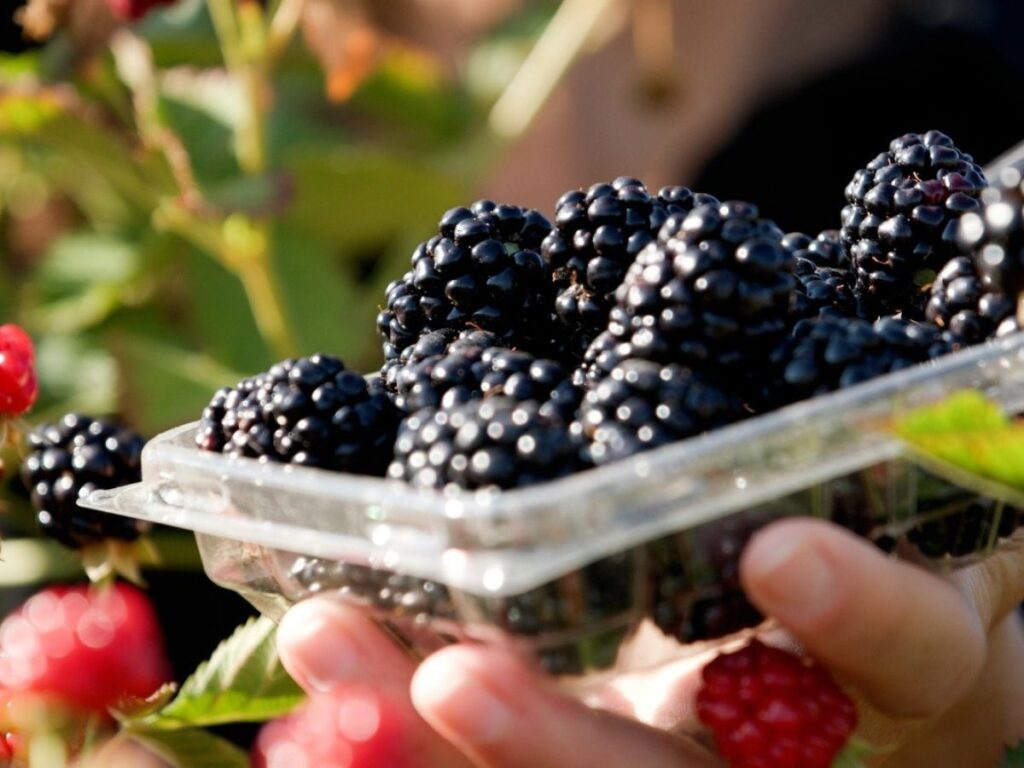
Average berry weight was 7.4 g across three years, similar to Sweet-Ark® Caddo. Berries have an attractive sheen and consistent fruit set, although modest size variation may occur between early and late harvest dates.
Firmness and Postharvest Performance:
Firmness is one of the strengths of Sweet-Ark® Immaculate™. Fruit firmness was comparable to Ouachita and Sweet-Ark® Caddo, with good retention in storage. Decay incidence has been low in trials, and red drupelet reversion levels are similar to Sweet-Ark® Caddo and within the commercially acceptable range. These postharvest attributes suggest strong potential for shipping markets, particularly under warm and humid harvest conditions common in the southeastern United States.
Flavor Profile:
Sweet-Ark® Immaculate™ has a classic blackberry flavor profile similar to Natchez. Sensory evaluations in trials indicate that flavor balance can vary with environmental conditions and crop load. Early-season fruit often exhibits moderate aromatic “grape-like” character, whereas mid- to late-season fruit tends toward a balanced or slightly tart-dominant profile. Soluble solids and titratable acidity values fall within ranges typical for commercial cultivars.
Yield Performance:
Sweet-Ark® Immaculate™ has shown consistent productivity across evaluation years, averaging 19,406 lb/acre in replicated trials in Clarksville, AR. Performance has been comparable to Osage and Sweet-Ark® Caddo, with stable yields observed across seasons and plant ages.
Plant Health and Adaptation:
Plants have shown good overall health under standard management conditions with no major disease concerns in trial observations. As an erect floricane-fruiting cultivar, Sweet-Ark® Immaculate™ is expected to be well suited to regions where Arkansas erect cultivars are commonly grown, including the upper South, Southeast, Midwest, and appropriate areas in the West and Pacific Northwest. Additional evaluations outside Arkansas are ongoing.
Summary
Sweet-Ark® Immaculate™ offers growers a firm-fruited, late-season blackberry with reliable yield, manageable plant architecture, and strong postharvest characteristics. Its ripening window and fruit firmness make it a promising option for operations targeting the profitable late floricane period. For licensing inquiries or a list of licensed propagators, contact agritco@uada.edu. Sweet-Ark® Immaculate™ is protected by U.S. Plant Patent USPP 36,781.